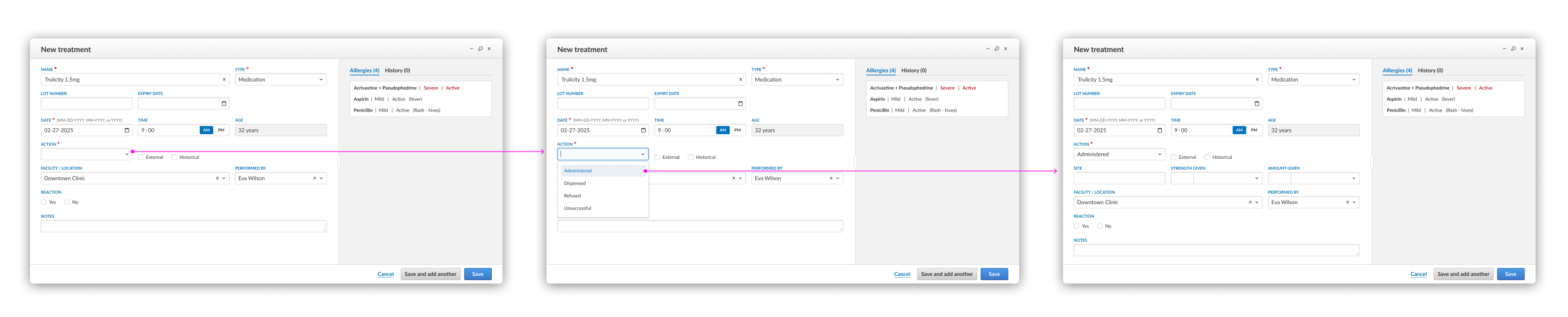
From Complexity to Clarity: Creating a Treatment Management Feature
Team
UX/UI Designer – Desiree Chek
UX Researcher – Vanessa Bois
Product Manager – Crystal Seaton
Engineering lead – Chris Pope
Company
TELUS Health
Challenge
Public health nurses and paramedics operate in high-stakes, time-pressured environments where accurate documentation is critical, but their EMR lacked a structured way to record and manage the treatments they administer. Because of this product gap, clinicians relied on workarounds, increasing documentation effort while making records harder to manage consistently across the care journey.
Approach
Through direct engagement with clinicians and iterative design, I led the design of a new treatment management feature. I partnered with cross functional team members to deliver a clear design strategy and translate user and business needs into a well-crafted solution. Built within the existing EMR and developed using an established design system, our approach allowed us to introduce new functionality while maintaining consistency across the product.
Impact
Clinicians can now record medications, immunizations, and procedures accurately and efficiently, directly within their workflow, reducing documentation burden and strengthening the quality and continuity of care. The feature strengthens the EMR’s ability to support end-to-end clinical documentation, improving record quality and creating a scalable foundation for future product development.
Exploratory Research
Building Understanding
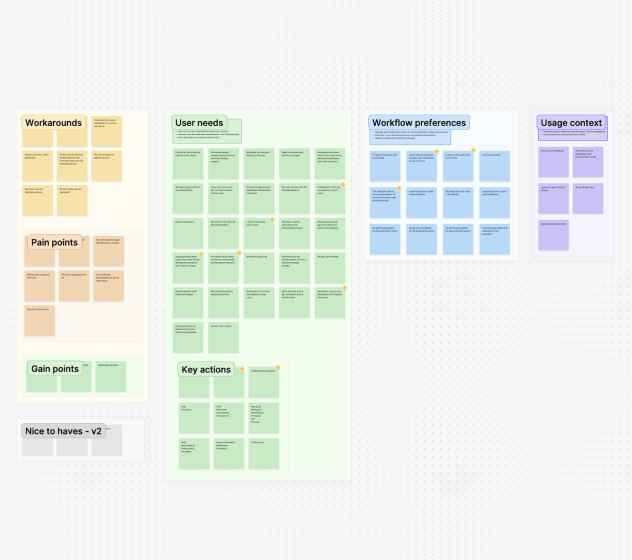
The UX Researcher and I conducted interviews with 4 public health nurses and 2 paramedics to understand how and when treatments are documented. From these sessions, we used affinity mapping to identify and prioritize the key user needs and highest-impact use cases.
Designing and Prototyping
Translating Insight into Design
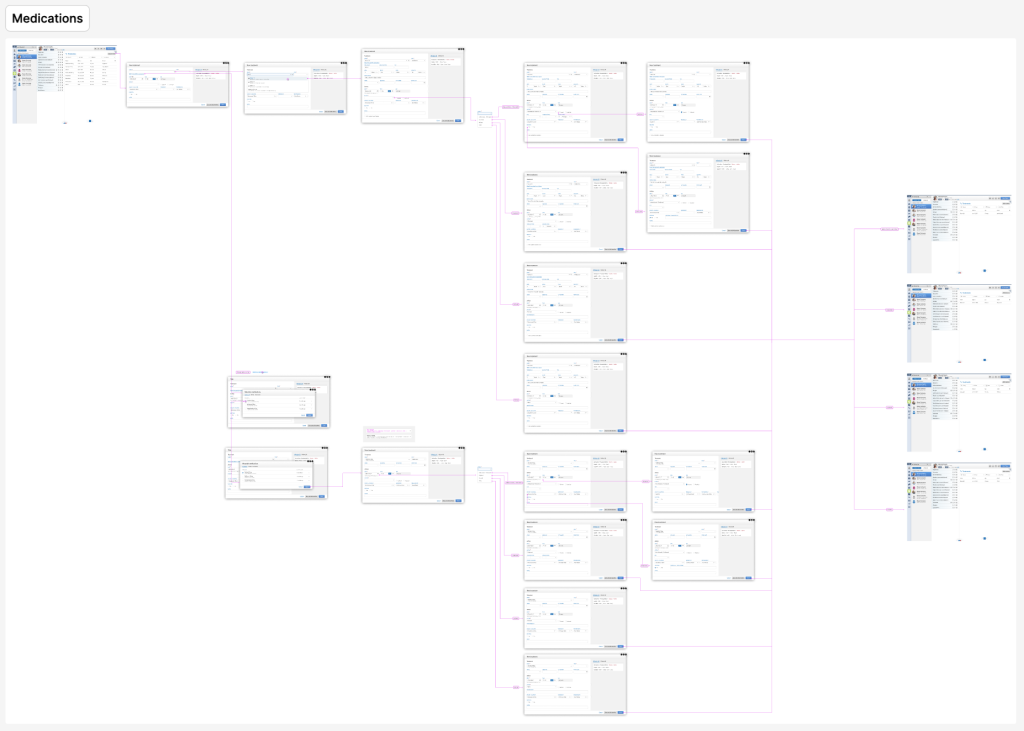
Using the product’s design system, I designed prototypes of key user flows. Grounding the work in established components ensured the new feature would feel familiar to clinicians who already use the platform.
User Testing
Validating with Users
I presented the prototype to the Ontario Nurses Community of Practice for feedback. This step surfaced real-world edge cases and validated core design decisions with the people who would use the feature daily.
Solution
From Complexity to Clarity
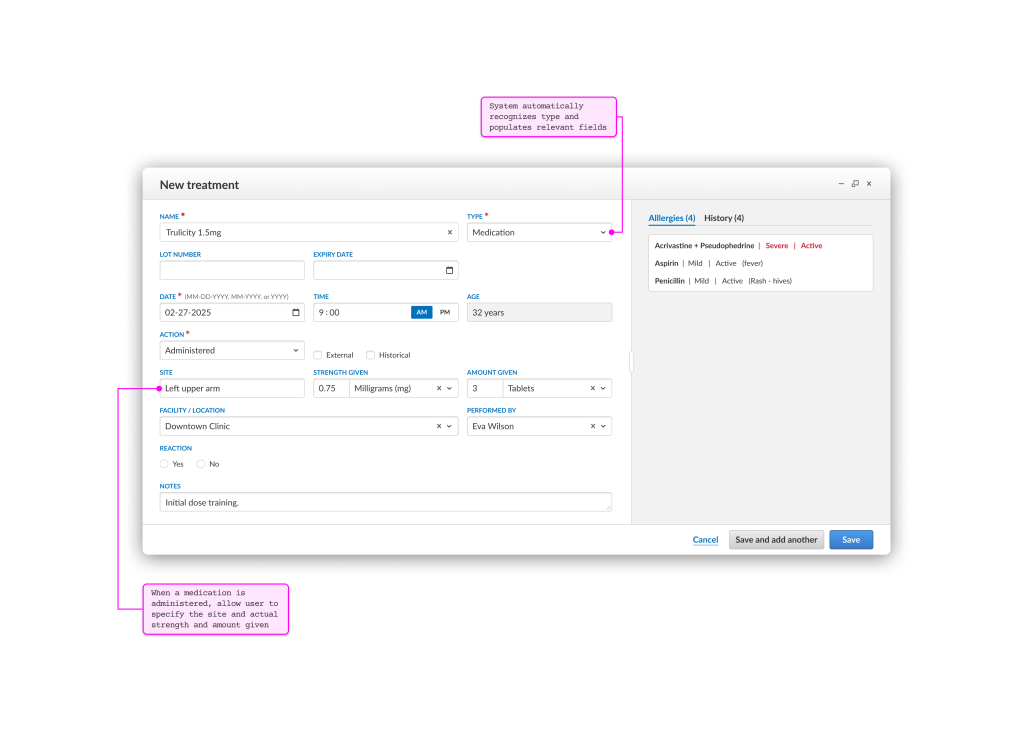
The new Treatments feature gives public health nurses and paramedics a single, structured space to record and manage all treatments, including medications, immunizations, and procedures, without leaving their existing workflow. A key product challenge was supporting a broad range of treatment types without creating unnecessary complexity. By centering the most common clinical workflows and applying progressive disclosure, we surfaced only what was relevant at each step, making data entry faster, more accurate, and far less cognitively demanding. Designed to feel like a natural extension of the EMR, it reduces friction at the point of care and strengthens the EMR’s ability to support end-to-end clinical documentation while creating a scalable foundation for future treatment workflows.